

Insights

Commodities – a little bit of volatility anyone?
Published February 2023
Author:
ANALYSIS: Most commodities are essential for our modern standard of living, so why are they so volatile?
A paper by the International Monetary Fund titled ‘The Long-Run Behaviour of Commodity Prices: Small Trends and Big Variability’ found that, in aggregate, there was a slight downward trend in inflation-adjusted commodity prices, over at least the 140-year period they studied, yet price variability was very high. In any one year, price volatility completely dominated the long-term trend.
In my career, where I have been taught to strive for strong risk-adjusted returns (where ‘risks’ is simplified to mean ‘volatility’), this conclusion doesn’t seem to indicate a particularly fertile hunting ground.
Most commodity outputs are incredibly useful, and in fact essential, for our modern standard of living, so why are they so volatile in the short term, and generally poor investments in the long term?
For this article, I will use one narrow definition of a commodity as ‘being a product of agriculture and mining’, so we can dig into some of the fundamental reasons for this outsized volatility. Most agricultural products and mining outputs are either identical or are largely undifferentiated. One ear of corn looks much like another, one tonne of copper looks much like another, one barrel of oil looks much like another.
Differentiated pricing difficult
This feature makes differentiated pricing based on branding or product attributes very difficult. Now, there might be various ‘grades’ or ‘purities’ of an item, but all items in those grades are, once again, undifferentiated. Some agricultural producers have been able to build branding, but it is rare and usually based on creating perceived rarity or exclusivity – for example, Champagne has achieved this via government regulation.
The core reason for large and rapid short-term price moves is that it is very hard to change either demand or supply quickly, a direct result of their production systems.
In agriculture, we plant the seeds and then hope we avoid fire, flood, insects, and drought. Then we have a narrow period to harvest. Once planted, the economic model tells you to sell 100% of production, at almost any price. Storage is expensive or impossible, letting them rot in the ground is far from ideal.
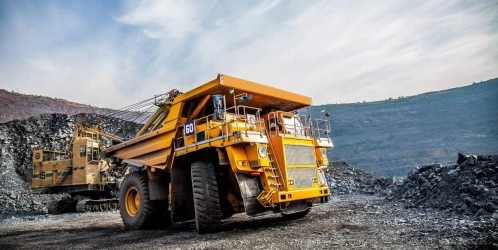
Graphite mining
The farmer is a price taker. If others have also had a good season, the price might be low. If we have all had bad seasons, the price for what little we have might be high – ultimately capped by the possible substitution of other products. Problem is, weather forecasting models don’t always work, disease could strike, and supply disruptions are unforecastable. There are lots of unknowns on the day we plant. The nexus between demand and supply expectations on any given day determines the price, and things happen to change expectations almost every day.
Mining and oil production face a similar demand and supply backdrop but with the added complication of substantial up-front capital costs to get a mine or well into production. These high upfront costs, and the complexity of stopping and restarting production, means producers are highly incentivised to accept any price above the short-term cash cost and, in some cases, even lower if they think prices will soon recover. Total cost of production might be higher but, in the short run, it can make sense to sell at a ‘loss’.
Why have inflation-adjusted returns been so low?
So, the way supply and demand meet explains the short-term volatility, but what are some potential reasons why – over the long term, with a growing global population and demand – that inflation-adjusted returns have been so low?
After all, the best productive land should be planted first, the easiest to extract minerals mined first, such that the industry should have a rising cost curve as new supply enters at a higher price than the existing established producers.
There are three key reasons in my eyes:
- Technology is constantly improving, keeping the real cost curve flat most of the time.
- Poor corporate governance. Despite the poor returns for most producers, existing and new entrants continue to think they can beat the odds, and they over-invest in new production in the good times (knowing they can’t shut it off in the bad!).
- National interest. Many governments want secure supply in some of these essential products, and encourage over-production to keep supply high.
There are many commodity funds and traders who study a myriad of information every day – weather, geopolitics, storage facilities, production outages, etc – looking to buy low and sell high, some successfully.
They do it by trading short-term dynamics, not by using buy and hold strategies looking for solid and rising returns on capital.
You can, of course, access commodity exposure in the equity markets, investing in the producers. To be consistently profitable, a producer needs to be lowest cost, either by being very large and getting the economies of scale, being close to end markets, or having a high-quality production base. Think: a large mine, very fertile land, or a mine that has a high percentage of copper in each tonne of soil mined. They also need to manage their operating and revenue risks. Even then, you can’t escape the volatility.
The future might be different from the past – better corporate governance seems to be the easiest problem to fix, and climate change mitigation might see cost curves start to slope upwards.
Against that, technology marches on and global population growth in most developed regions – read wealthy – is also beginning to slow.
You can make a return in commodity markets, but know the risks you are taking – caveat emptor.
Disclaimer: This article has been prepared in good faith based on information obtained from sources believed to be reliable and accurate. It does not contain financial advice. This article was supplied free to NBR and first published 28 February 2023.
Related reading
CSL and Fisher & Paykel Healthcare (FPH) were working their…
At first glance, the recent surge in Briscoes’ share price might imply a significant earnings beat, takeover speculation, or p…
The last two or three years have seen the Official Cash Rate (OCR), and other short-term interest rates, touch heights not seen since before the …
Fittingly for an industry bu…
The past couple of years have been challenging for domestic bond investors. The Bloomberg N…
The core concept of Environmental, Social, and Governance (ESG) has existed for centuries, dating back to religious codes banning investments in slave labour, through to div…
It is no secret that us New Zealanders love to invest in property as a way of building wealth. …
Kiwi households have almost NZ$250 billion sitting in their bank accounts - that's more than double all of th…
For investors that hold assets denominated in a foreign currency, there is both a direct exposure to exchange rate risk, as well as the price risk of the a…
Octagon looks to enhance the returns for our customers by being an active manager in the markets we invest in. This means, by definition and sty…
Bonds are often seen as less glamorous, less volatile, and basically boring when compared with the high-octane, high-ris…
Diversification is the great free lunch in investing – a …
to streamline the post-election government formation process.
Waiting for Godot, by Irish playwright Samuel Beckett, is a tragicomedy in two act…
More than a half-century ago, in November 1971, the then Prime Minister of New Zealand Keith Holyoake flew to Invercarg…
Say we flip a coin. Heads or tails? Heads – you may carry on exactly as you are now. Tails – 77% of your revenue strea…
How profitable are New Zealand’s banks? Seems a fair question aft…
For investors that hold assets denominated in a foreign currency, there is a direct exposure…
In a July 2022 article we covered the basics of New Zealand Government inflation-linked bonds; how the…
With its mild weather, beautiful beaches, bountiful natural resources, and economic performance, Australia is often described as the lucky country (…
The term ESG (Environmental, Social and Governance) was officially coined in a 2…
New Zealand net migration has been a hot topic of late. As our econo…
One of the simplest truisms in investing is that share prices follow profits – on average, over the long term. Perh…
A few years back I read a book by Daniel Kahneman, Thinking Fast and Slow. It coined a phrase that captures the way I think about volatil…
Inflation-linked bonds are another option for income investors.
Today, we’re going to discuss wha…
The effects of Covid continue to reverberate throughout New Zealand more than two years after…
Where we came from
The boom in New Zealand’s property market has been extremely…